
Birmingham Plastics Network’s Policy Commission calls for stronger UK recycling capacity
12 October 2026
The Birmingham Plastics Network (BPN) launched its latest policy commission report ‘Recycling as reindustrialisation: building the UK's circular plastics industry’ at the recent Resource and Waste Management Expo 2026.
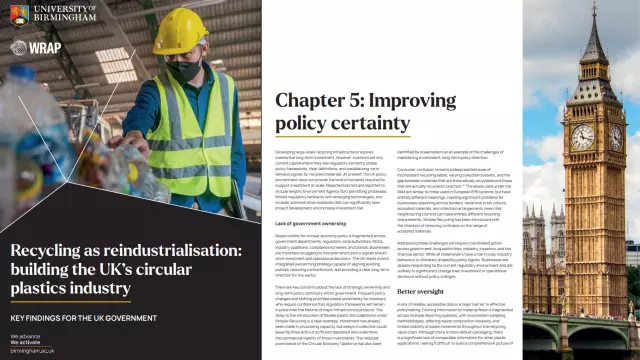
The new commission examines the challenges and opportunities surrounding UK plastics recycling, calling for a long-term UK strategy to strengthen domestic plastics recycling and reprocessing, while recognising the sector’s role in the country's industrial infrastructure. The commission brought together industry experts, policymakers and researchers, alongside 28 witnesses, to develop practical yet ambitious recommendations aimed at increasing domestic recycling and reprocessing capacity, strengthening markets for recycled materials, and creating greater certainty for long-term investment.
This commission builds on the success of the 2024 report by examining in greater depth the challenges and opportunities surrounding UK plastics recycling. In particular, it focuses on how the UK can strengthen domestic recycling and reprocessing capacity, improve policy certainty and create the conditions for long-term investment. The aim is not simply to describe the current landscape, but to identify a focused and practical set of recommendations that can support a more circular, resilient and productive plastics recycling and reprocessing system in the UK. SCHEMA's Digital & Information Technologies Lead, Professor Antoine Buchard from the University of York's Centre for Green chemistry served on the commission, saying that it was a privilege to serve on this policy commission and gather evidence from experts working across the entire plastics value chain.
"Waste plastics should be seen as a valuable resource, and plastics recycling is vital to make our economy more independent and resilient. One key recommendation of the report is therefore the creation of a dedicated national body to implement consistent and widespread recycling of plastics across the UK."

To produce recommendations that are both ambitious and realistic, the commission drew on the expertise of our panel and the evidence of a wide range of witnesses able to speak to different points across the plastics lifecycle. The combination of perspectives allowed the commission to refine clear recommendations from a sector that is often complex, fragmented and fast-changing. DEFRA and WRAP engaged with the project and helped test its assumptions against current industry and policy realities.