

SCHEMA Hub's annual report celebrates year of firsts
The Sustainable Chemicals and Materials Manufacturing Hub (SCHEMA) published its first annual report last year, setting out the activities, research programmes and partnerships established during its first year. As we move towards our second year of reporting, we take a look back at the report.
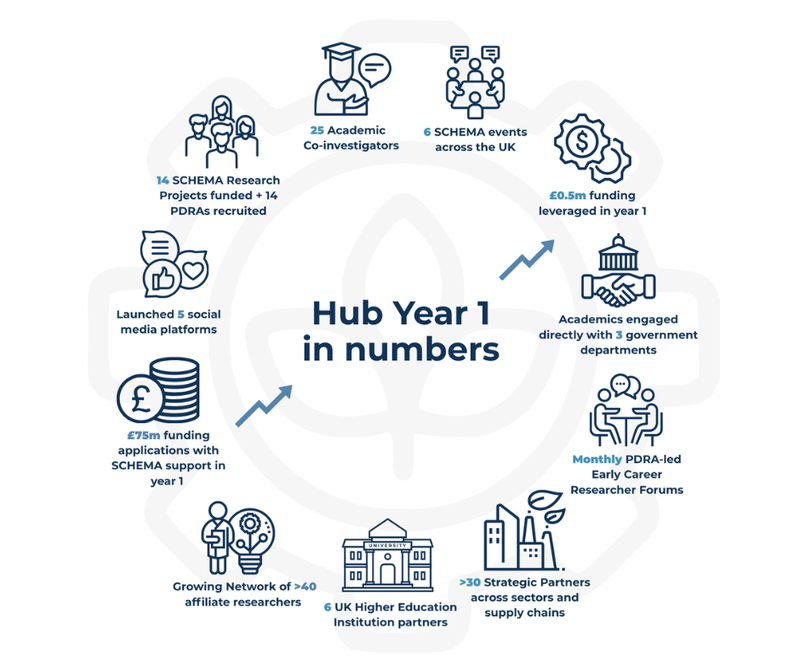
SCHEMA Hub Year One in numbers
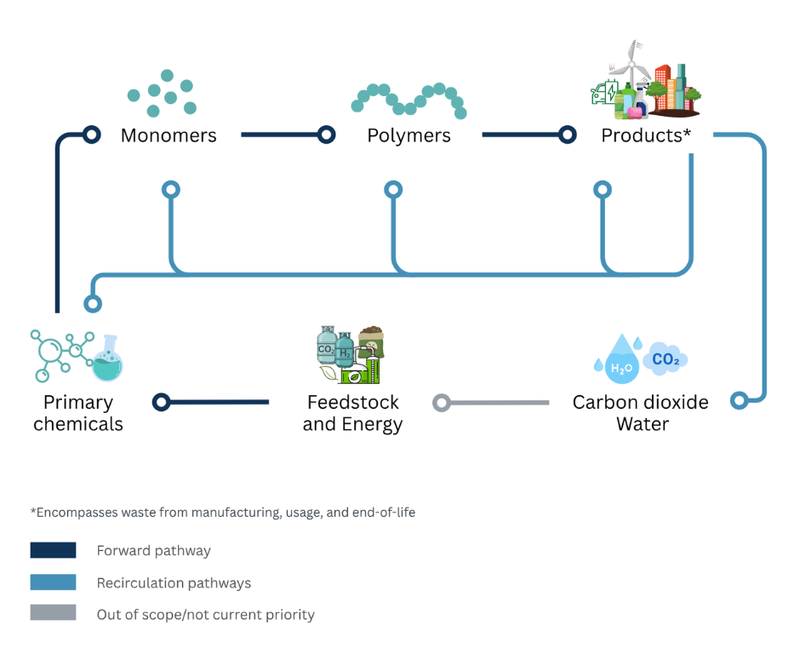
SCHEMA Hub Year 1-2 research
The report covers the Hub's vision and research programmes, funded projects and case studies, partnership development, events and community engagement, early career researcher training and mentoring, communications activities, and progress towards building an inclusive and sustainable research environment. It also includes key performance metrics and outlines plans for future research, collaboration and commercialisation activities:
- The Hub funded 14 research projects and recruited 14 postdoctoral research associates across its six higher education institution partners. It engaged more than 30 strategic partners, supported funding applications worth £75 million, and secured more than £500,000 of support from strategic partners. Among the projects highlighted in the report are the "continuous manufacturing of biodegradable microcapsules" with Naturbeads, the "hydrogenation of CO₂ to methanol" with TOPSOE, and the development of "Renewable Polyesters for Recyclable and Repairable Composite Resins" with Scott Bader.
- The report also details efforts to build industrial and academic partnerships through workshops, symposia and bilateral discussions. Alongside this activity, the Hub launched the Developing Sustainable Leaders Programme and a mentoring scheme linking postdoctoral researchers with experienced colleagues from academia and industry. SCHEMA hosted a series of events during the year, attracting 330 participants and featuring contributions from industry leaders and early career researchers. These activities were delivered in partnership with organisations including the Royal Society of Chemistry, iCAST and the Unilever Prosperity Partnership.
It concludes by outlining plans for future conferences, continued growth of the Hub's research network and the introduction of Early-Stage Commercialisation Projects intended to support the translation of research outputs into manufacturing applications.
Download and read it here

